How to replace a broken part with a 3D print
This guide from Yannic Fréson 3D, a 3D printing service for the Heist-op-den-Berg area in Belgium, explains how to have a broken plastic part recreated with a 3D printer. It covers which parts work and which do not, what you need to supply, how to measure, which material fits, what it costs and how long it takes.
Short answer
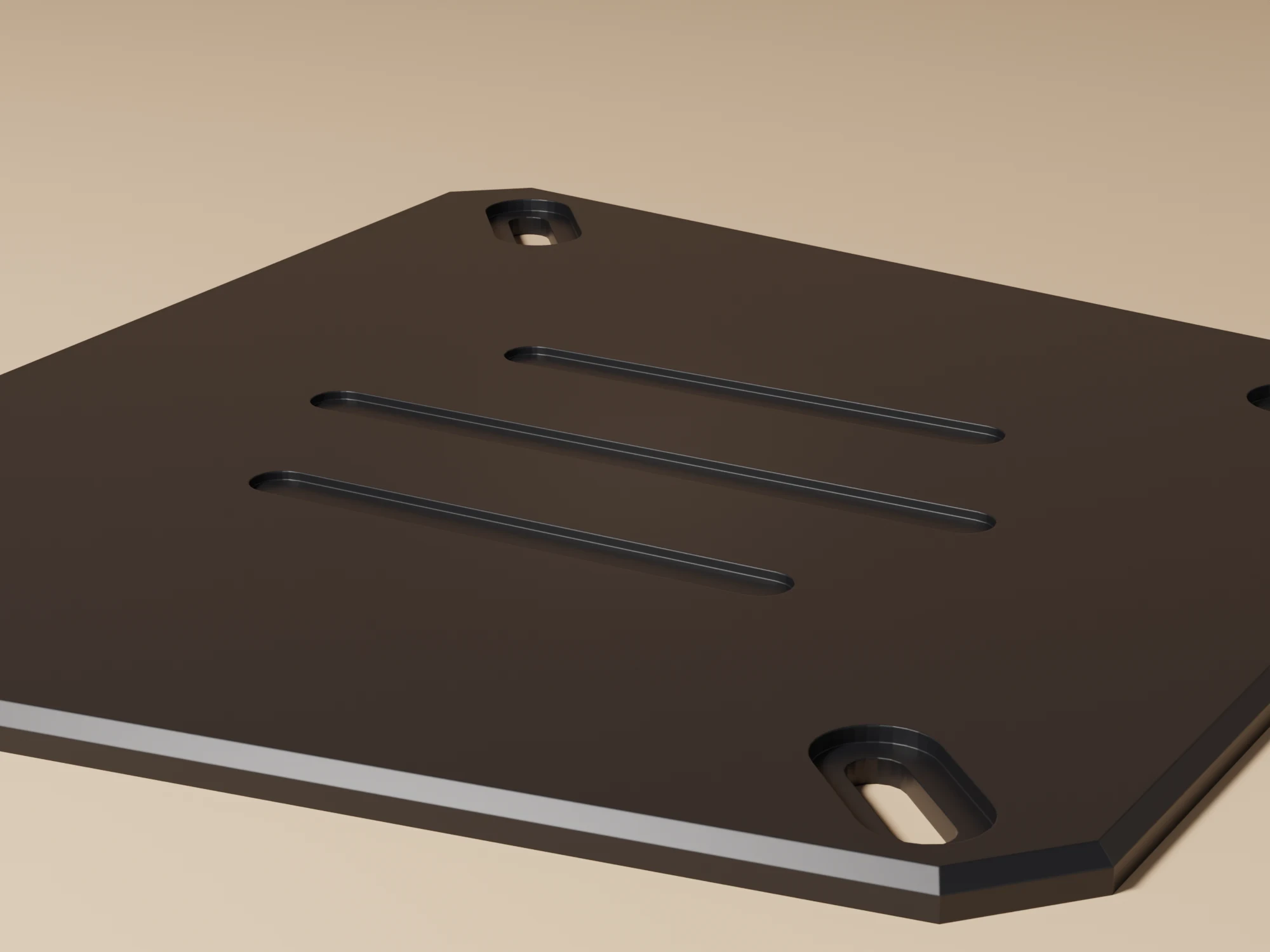
Yes, many broken plastic parts can be recreated with a 3D printer: knobs, clips, caps, brackets and cover plates up to 256 × 256 × 256 mm. You supply the broken part or photos with measurements. Redrawing costs €60 per hour, printing a small part from €10. After your approval it is ready in 3 to 5 working days.
Contents
Can you have a broken part 3D printed?
Yes, in many cases a broken plastic part can be recreated with a 3D printer. The part is first measured and redrawn as a 3D model and then printed in PLA, PETG or ASA. It makes most sense when the part is no longer on sale, or only as part of an expensive assembly.
An example: a clip from the dishwasher, the knob of an old cooker, a cap from a garden chair or a holder in a car for which the manufacturer now sells only the complete panel. The appliance is still fine, apart from those five grams of plastic. A print then costs a fraction of a new appliance. The largest part Yannic Fréson 3D prints in one go is 256 × 256 × 256 mm.
Which parts work well and which do not?
These work well: knobs, clips, caps, plugs, brackets, holders, spacers, cover plates, guides and gears under a light load. Not suitable are safety-critical parts, parts in contact with food, parts that get hot, transparent parts and anything that has to be as flexible as rubber.
| Works well | Does not work, or better not |
|---|---|
| Rotary knobs, slider knobs, handles | Parts of brakes, steering, seat belts or child seats |
| Clips, hooks, catches | Parts in contact with food or drinking water |
| Caps, plugs, cover plates | Parts near a heating element, engine or exhaust |
| Brackets, holders, supports | Transparent parts such as lenses and sight glasses |
| Gears and guides under a light load | Seals, bellows and other rubber-like parts |
| Battery covers, low-voltage enclosures | Mains-voltage enclosures, load-bearing parts |
The line is not a matter of what is possible, but of what is responsible. A print can contain a weak layer that you cannot see from outside. With a knob that is an inconvenience. With a brake lever it is not.
What do I need: the part, a photo or measurements?
The broken part itself is the best starting point, even if it is in pieces. If sending it is not possible, sharp photos from every side with a ruler in shot, plus the main measurements, are enough. Always say what the part fits onto and what it has to do.
In order of preference:
- The part itself, preferably together with the component it fits into or onto. You can send it by post; in the delivery municipalities it is collected from your door by appointment.
- Photos and measurements. Straight from the front, from the side and from above, with a ruler or callipers alongside.
- An existing 3D file. For many common parts somebody has already shared a model. Check the licence.
- Make and model number of the appliance. That helps to trace the original shape.
How to measure a part
Measure a part with callipers, to within 0.1 mm, and start with the dimensions it has to fit: the diameter of a shaft, the distance between two holes, the width of a slot. The outside shape can be a millimetre out. The fit cannot.
A digital calliper costs little and is the only tool you need. This is how to go about it:
- Measure the fit on the mating part, not only on the broken one. A worn knob says little about the shaft it has to go on.
- Measure holes from centre to centre. Measure from the left edge of one hole to the left edge of the other: that is the same distance and much easier.
- Note a shaft with a flat side separately: the diameter and the thickness across the flat.
- Measure every dimension twice and write them on a sketch or on the photo itself.
- Curves and sloping faces do not need measuring. A photo straight from the side with a ruler alongside is enough.
How much clearance is drawn around those dimensions is not something you have to work out yourself. That is part of the redrawing.
Which material for which part?
For a replacement part indoors at room temperature, PLA is enough. For a part that has to click, bend or get damp, choose PETG. For a part outdoors, in the car, on a motorcycle or in an appliance that gets warm, such as a dishwasher, choose ASA, which according to the manufacturer stays dimensionally stable up to about 100 °C.
| Part | Material | Why |
|---|---|---|
| Knob of a radio, cupboard or lamp | PLA | Stiff, crisp, no heat |
| Clip, catch, hinge | PETG | Tough, bends instead of breaking |
| Part in a dishwasher, washing machine or fridge (not in contact with food) | ASA or ABS | Moisture and heat up to 70 °C |
| Garden furniture, letterbox, roller shutter | ASA | UV- and weather-resistant |
| Car interior, motorcycle | ASA | Heat behind glass and in the sun |
The original was often ABS or polypropylene. A print does not have to be the same material, but it does have to be up to the same job. The figures behind these choices are in the guide PLA vs PETG vs ABS/ASA.
What does having a part recreated cost?
Having a part recreated costs the drawing plus the print. At Yannic Fréson 3D redrawing costs €60 per hour, billed per 15 minutes with a minimum of half an hour. The print of a small part costs €10, the minimum order. A simple knob therefore comes to €40.
| Example | Material | Design time | Guide price |
|---|---|---|---|
| Replacement knob, you have a 3D file yourself | PETG, 18 g | none | €10 |
| Replacement knob, redrawn from the part | PETG, 18 g | 30 min | €40 |
| Ordering the same knob again later | PETG, 18 g | none | €10 |
These are guide prices based on a worked example, not completed jobs. More complicated parts, with snap fits, screw threads or many fits, take more drawing time. The exact price is in your quote before anything is drawn or printed. All prices are final: small enterprise under the VAT exemption scheme, VAT not applicable. The breakdown of the print price is on the pricing page and in the guide on what 3D printing costs.
Good to know. You pay for the design once. If you need several copies, or the same part breaks at the neighbours' too, order them together: the minimum order applies per order, not per part.
How long does it take?
A recreated part is ready 3 to 5 working days after you approve the quote. Allow about an hour or two for printing a small part. The rest of the time goes into measuring, redrawing, finishing and checking the fit.
For a part with a close fit, a test piece is sometimes printed first, at the price of a normal print, to try on the appliance. That can mean an extra round, especially if the part has to travel back and forth. In that case it is stated in the quote. A well-measured part is the best way to skip that round.
Is that allowed? (intellectual property and safety)
Recreating a purely functional part to repair your own appliance is as a rule not a problem. It is different when the part is protected by a design right, a patent or a trade mark, or when the recreated part is sold. This is general information and not legal advice.
Three things to know:
- Shape and appearance can be protected as a design, and a technical function by a patent. The European design rules, revised in 2024, contain a repair clause for certain visible replacement parts of complex products (Directive (EU) 2024/2823). The Belgian FPS Economy explains the different rights.
- Logos and brand names are protected as trade marks. A knob without the logo does the same job.
- Safety. Whoever makes a product and supplies it to a consumer is responsible for it as the manufacturer under the European General Product Safety Regulation. That is why Yannic Fréson 3D refuses parts whose failure would be dangerous.
Warranty is a fourth point: a non-original part can affect the factory warranty of an appliance. Check that if the appliance is still under warranty.
Want it printed?
If a part like that is waiting in a drawer at your place, send photos and measurements, or post the part. How it works is explained on the page about 3D printed replacement parts. Or request your quote straight away and add your photos.
In short
- Knobs, clips, caps, brackets, holders and lightly loaded gears work well. Safety-critical, hot, transparent or rubber-like parts do not.
- The broken part itself is the best starting point. Failing that, sharp photos with a ruler in shot and the main measurements are enough.
- A simple replacement knob costs €40 as a guide price: half an hour of redrawing and the print in PETG. If you order another one later, you pay only for the print.
Frequently asked questions
The part has broken into pieces. Can it still be recreated?
Usually, yes. Put the pieces together and keep them all, including the small ones. Together they show the original shape and the place where it broke. That fracture line is useful information: the new part can be drawn thicker or with a fillet there, so that it does not break in the same place again.
Can you recreate a part if I no longer have the original?
Yes, if the place where it belongs can still be measured. A missing cover cap or a lost knob is then drawn from the opening, the shaft or the screw holes it has to fit. A photo of the same part on another appliance or from the manual helps to work out the shape.
Can I get the 3D file of my recreated part?
Ask when you make your request; it is then agreed beforehand and stated in your quote. That way it is clear what you may do with the design before anything is drawn.
Rather have it printed than read about it?
Send your file, sketch or broken part. You get a fixed price before anything is printed.